Inside Dubai’s High-Rises: Plumbing Challenges & Smart Solutions
From the world’s tallest structure ever built to its ever-expanding skyline, Dubai has redefined what it means to build upwards. The fact that Dubai was transformed into one of the world’s top five cities with the most skyscrapers within just a few decades, makes it an engineering marvel – especially when you consider its desert landscape. But beneath these architectural marvels lies the plumbing works that makes living and working in high-rises possible.
High-rise buildings demand far more complex water supply, drainage, and maintenance systems than a traditional house or villa. Plumbing services in Dubai helps to manage proper water pressure across umpteen floors, preventing backflow, and ensuring every resident or business has safe, consistent access to water.
In a city where growth is vertical and expectations are sky-high, plumbing is a cornerstone of comfort and functionality. That is why professional, expert plumbing services are more essential than ever.
How Plumbing Systems Differ in Villas and High-Rises
Plumbing in a building may seem universal to the untrained eye but the differences between systems in high-rises and villas are significant. A typical house or villa relies on straightforward horizontal layout, gravity-fed or modestly boosted water pressure, and relatively easy access to pipes for maintenance. In contrast, high-rise buildings demand far more sophisticated engineering.
With dozens of floors or more, high-rises require the creation of complex pressure zones vertically to ensure consistent water supply across different levels. Booster pumps, pressure-reducing valves, and vertical drainage stacks must work in harmony. A minor plumbing or drainage failure can impact multiple apartments or cause damage several floors below. Moreover, repairs require skilled plumbing services in Dubai, as the plumbing in high-rises is often enclosed within sealed shafts or mechanical floors and cannot be easily accessed by laymen.
Unique Plumbing Challenges in High-Rise Buildings
The sheer height of high-rises, combined with the large number of occupants and the expectations of uninterrupted utility services in a city like Dubai, presents a totally different set of plumbing challenges that facility managers must be aware of. Below are some of the most significant plumbing challenges in high-rises and how an expert plumbing service provider in Dubai, like Thushhaara, addresses them.
Water Pressure Imbalances
Water pressure management in high-rises is a constant balancing act. Without any intervention, upper floors often suffer from inadequate water pressure while the lower floors can experience excessive pressure due to gravity. This can impact basic tasks like showering or washing, and add significant strain on pipes and fittings.
The challenge of water pressure imbalances in high-rises is usually addressed using a complex system of specialized equipment. Pressure booster pumps equipped with variable frequency drives (VFD) help maintain consistent pressure at upper levels, while pressure-reducing valves (PRV) are installed on lower floors to avoid pipe bursts. Constant pressure monitoring and regular system calibration are essential parts of high-rise plumbing maintenance plans.
Suds Zone Effect
Drainage systems in tall buildings face challenges that are not typically encountered in houses or villas. One such issue is the suds zone effect. Here, soapy water and air from washing machines, kitchen sinks, showers and dishwashers on higher floors descend rapidly through the drainage system, pushing foam or wastewater into fixtures on the lower floors. This can lead to cross-contamination, foul odors, and even gurgling sounds.
To fix this issue, experienced plumbing service providers design specialized vent stacks, air admittance valves, and often install separate waste stacks for high-discharge appliances like washing machines. Proper venting also ensures the system remains balanced, allowing wastewater to drain efficiently without forcing gases into lower units.
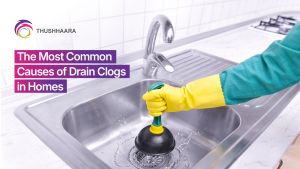
Drain Clogs and Backflows
High-rises see a heavy volume of wastewater, and the risk of clogs, backflow, and odors is higher than that with a house or villa. Normal drainage related risks are also compounded due to the higher number of occupants. For example, improper disposal habits such as flushing wet wipes, pouring oil down drains, or discarding debris can quickly lead to drainage issues.
These drainage problems can be prevented through regular professional cleaning using hydro jetting, and the installation of grease traps and proper vent stacks. Experienced MEP service providers also design accessible clean-out points and classify the drainage system into zones, making troubleshooting and maintenance faster and less disruptive.
Pipe Leaks and Burst Risks
In a high-rise building, leaks can cause cascading damage across multiple floors. The pressure differences across the vertical length of pipes, corrosion from poor water quality or salinity, thermal expansions/ contractions and age-related wear, can cause pipe leaks or bursts.
Potential pipe leaks can be prevented using routine inspections, the use of pressure relief valves, expansion joints, and upgraded materials like PEX or HDPE. If a leak is detected, it's crucial to contact a professional MEP service provider in Dubai with rapid-response capabilities, as addressing the issue quickly helps minimize the risk of structural damage and mold.
Water Hammer and Noise Pollution
Water or any other liquid is almost incompressible. So, when a valve is closed suddenly, hydraulic shock called Water Hammer occurs. In high-rise systems, this is amplified due to the velocity and volume of water in vertical pipes. The resulting loud “bang” not only disturbs residents but can damage pipe joints and fittings over time.
This challenge is addressed through a mix of mechanical and design solutions: water hammer arrestors, properly sized air chambers, acoustic pipe insulation, and minimizing long, unsupported pipe runs in noise-sensitive areas. Reputable plumbing-service Dubai contractors pay special attention to these factors during both design and maintenance projects to ensure normal functioning and durability.
Water Heater Placement & Hot Water Lag
Delivering hot water efficiently in a 60-story tower is vastly different from a two-story villa. A centralized system will often struggle with temperature maintenance, leading to long wait times (hot water lag), energy loss, and resident complaints.
To address this, many new developments in Dubai incorporate hybrid solutions such as decentralized water heaters for specific zones, or recirculating pumps with smart controls to ensure quicker access to hot water while reducing waste. These innovations are now offered by forward-thinking plumbing services in Dubai.
Water Quality Degradation
Poor water quality is another plumbing challenge in high-rises. This is usually caused by stagnant water in pipes, corroded piping, or microbial buildup in underused outlets. This can lead to rust-colored water, bad tastes, and even health hazards.
The best plumbing service in Dubai - Thushhaara Technical Services LLC - implements comprehensive water management strategies to ensure water quality. This includes regular flushing protocols, UV or carbon-based filtration systems, corrosion-resistant piping materials, and continuous quality testing using smart sensors. This will allow building managers to receive real-time alerts on water quality metrics.
All these plumbing challenges highlight the importance of choosing experienced plumbing services in Dubai that specialize in high-rise infrastructure.
Overview of Common Plumbing Emergencies in High-Rises & How to Prevent Them
| Emergency | Cause | Preventive Measures |
| Pressure Imbalances | Poorly maintained booster systems or PRVs | Test water pressure routinely, Service booster pumps and PRVs, Monitor flow rates with smart sensors |
| Burst Pipes | Unchecked water pressure, ageing pipes, or thermal stress | Install and maintain PRVs, Conduct regular pipe inspections, Replace ageing or corroded piping |
| Leaks & Water Damage | Undetected micro-leaks, corrosion, or faulty fittings | Install leak detection sensors, Perform scheduled riser inspections, Service pressure systems regularly |
| Drain Backups | Grease, hair, or non-flushables clogging shared drainage lines | Schedule routine drain cleaning, Use drain cameras and jetting, Grease traps and vent stacks |
| Water Heater Failures | Sediment buildup, thermostat malfunction, or ageing equipment | Flush water heaters periodically, Inspect thermostats and connections, Schedule professional servicing |
Regulatory Compliance Challenges in Plumbing
In Dubai, plumbing systems in high-rises must adhere to strict regulations set by key authorities to ensure safety, efficiency, and sustainability. The Dubai Electricity and Water Authority (DEWA) oversees water system standards, while Dubai Civil Defense ensures plumbing does not interfere with fire safety measures. Additionally, Dubai Municipality enforces building codes, which include drainage layouts and water conservation standards.
The relevant concepts regarding plumbing from the building code are backflow prevention, water pressure control, and material quality. Adherence to these regulations is crucial to avoid fines, delays, or system redesigns.
Hiring reliable plumbing services in Dubai ensures compliance with all codes and regulations, preventing costly errors, and ensuring peace of mind for developers and residents alike.
Expert Plumbing Services For Any Challenge
Plumbing in Dubai’s high-rise buildings is a complex, dynamic process that demands specialized expertise. From pressure regulation across floors to emergency response, every detail matters. Your ordinary service provider may lack the necessary expertise to tackle the unique plumbing challenges arising in high-rises. That is why choosing the right plumbing services in Dubai is critical. A skilled service provider understands the regulatory landscape, employs preventive strategies, and leverages modern technologies to ensure safety and efficiency. In a city projecting the image of peak human engineering and a futuristic vision, only those with deep technical knowledge can keep the water flowing where it should be.
Also read: Don’t Ignore That Drip: Early Signs of Pipe Leaks and What You Should Do!
FAQs
- Why is plumbing more complex in high-rise buildings compared to villas?
Plumbing in high-rise buildings is more complex due to height-related challenges. Additionally, high-rises accommodate more people, involve more extensive construction, and naturally face greater plumbing demands due to their scale and complexity.
- What are the most common plumbing emergencies in Dubai’s high-rises?
Burst pipes, drain backups, water heater failures, and water leaks are among the most common. These are often caused by ageing infrastructure, high water pressure, or improper waste disposal. Regular maintenance and inspections by qualified plumbing service providers in Dubai can prevent most of these issues.
- How is water pressure managed in tall buildings?
Water pressure is controlled using booster pumps, pressure-reducing valves (PRVs), and zone-based plumbing design in high-rises.
- How can building managers prevent drain clogs and backflows?
Routine drain cleaning, grease trap installation, and resident awareness can help prevent drain clogs and backflows.
- What technologies are improving high-rise plumbing today?
Modern plumbing services use leak detection sensors, automated shut-off valves, water quality monitors, and energy-efficient hot water systems. These technologies reduce water waste, detect problems early, and ensure smoother building operations.
- How often should a high-rise plumbing system be serviced?
Major components like risers, pumps, and drainage lines should be inspected quarterly. Full system audits are typically done annually by experienced plumbing service providers in Dubai.
- What causes low water pressure in upper floors of high-rise buildings?
Low water pressure is usually caused by insufficient booster pump performance, ageing pipes, or poorly calibrated pressure zones. High-rise buildings require pressure-regulated systems to ensure consistent water delivery at all levels.
- How can I tell if there’s a leak in a high-rise plumbing system?
Look for unexplained dampness, ceiling stains, mold growth, or unusually high water bills. Smart leak detection systems are increasingly used in Dubai’s high-rises for early warning and prevention.
- Can high-rise plumbing systems affect water quality?
Absolutely. Stagnant water in long pipelines, corrosion from aging pipes, or poor maintenance can degrade water quality. Contact Thushhaara for free consultation and expert plumbing solutions in Dubai.
Air conditioning | Electrical services | Plumbing services | Handyman | Cleaning services | Pest control services | Painting services | Renovation refurbishment | Landscaping services | Swimming pool maintenance | Garage door maintenance | Water tank cleaning | Annual maintenance contract
\